
Transparent Compensation Under Control
Compare salaries, identify risky discrepancies, and prepare your company for the new compensation rules.
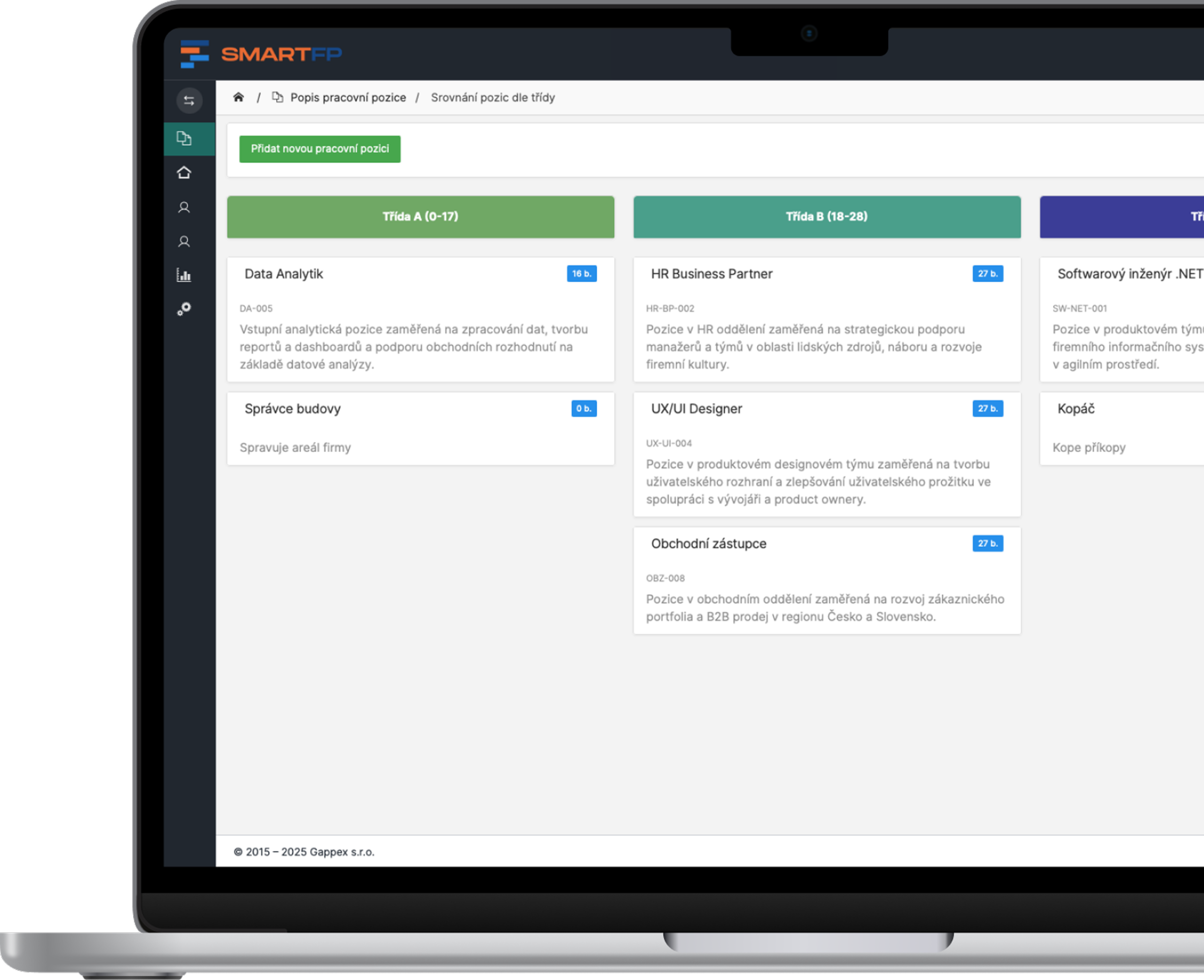
main functions
Everything You Need for Transparent and Fair Compensation
From job classification and payroll analytics to employee requests and reporting.
Comparable Groups
Determine which jobs are truly comparable.
Pay Grades
Set the brightness zones based on the workload.
Payroll Analysis
Identify differences, trends, and risky deviations.
Gender Pay Gap
Compare the pay of women and men in comparable groups.
Employee Requests
Process the request from submission through response.
Reporting and Auditing
Have your outputs and change history ready.
Problems vs. Solutions
Transparent compensation starts with the right data
According to the current Czech proposal, the new rules are set to introduce basic obligations effective January 1, 2027. Companies must therefore know not only how much they pay each employee, but also why, and who can be objectively compared.
Problems
The positions are not comparable
The job title alone isn’t enough.
There are no clear rules
It is not clear why wages differ.
The data is divided
Positions, employees, and salaries are tracked in different systems.
You’ll realize the differences too late
You often don’t discover the risk until you submit an application or undergo an audit.
New Requirements Are Coming
Companies will need more data, transparency, and reporting.
How SmartFP solves it
Comparable Groups
Compare the positions based on objective criteria.
Performance Evaluation
Each position can have a clear evaluation profile.
Data in One Place
You’ll integrate the necessary HR and payroll data into a single environment.
Automatic Difference Analysis
You’ll quickly identify discrepancies and significant differences in compensation.
Prepared Outputs
You can use the data for employees, HR, and reporting.
From Job Descriptions to Justifiable Compensation
SmartFP can be integrated with the Job Description module to use existing job information as the basis for further classification.
Job Description
Classification
Pay Grades
Analysis
Get Ready for Transparent Compensation
Keep track of job positions, payroll data, and pay discrepancies.

How Transparent Compensation Works in Practice
Get the data you need
Import them, enter them manually, or integrate with existing systems.
You don’t have to go to the trouble of rewriting everything.
Classify Job Positions
Classify jobs into clearly defined, comparable categories.
Do you know which positions can be compared accurately?
Compare Compensation
Track wages, disparities, and the gender pay gap across different groups.
You’ll quickly identify discrepancies and risk areas.
Who for?
Who is transparent compensation at SmartFP intended for?
HR Department
Keep your job positions and compensation under control.
Job Classification
pay grades
analysis of differences
Larger companies
Prepare for the new legal requirements well in advance.
Gender Pay Gap
reporting
structured data
Staff
Simplify access to compensation information.
clearer rules
requests for information
a clear process
Management
Make decisions based on realistic and clear data.
Remuneration Overview
Identification of Deviations
Comparison of Groups
Read our case study
See how SmartFP helps companies digitise their daily agenda in practice.

Webinar Recording Transparent Compensation: What to Expect and How to Approach It The amendment to the Labor Code will impose new obligations…
Learn how to use SmartFP in minutes
You can customise the system to make it easy to use for everyone. Accountants, receptionists and bosses. On the computer and in the mobile app. Just a few details below. We will contact you and suggest a date for a demonstration, free of charge and without obligation.
FAQ
Your most common questions
Looking for answers to your questions or need help with our system? We’ve put together a list of frequently asked questions where you can find useful information and solutions to common problems. If anything is not clear to you? Send us a question.
What is transparent compensation?
Clear and objective rules for comparing and setting compensation.
When are the changes supposed to take effect?
According to the current proposal, the basic rules are to take effect on the 1st. 1. 2027.
What Is the Gender Pay Gap?
The gender pay gap in the groups being compared.
Can I attach a job description?
Yes, existing job descriptions can be used as input.
What is the Remuneration Transparency Directive?
New rules aimed at ensuring fair and transparent compensation.
What does “work of equal value” mean?
Positions comparable based on objective criteria and the level of difficulty of the work.
How does SmartFP help?
It will integrate job classification, payroll data, and their analysis.
Do we have to enter the data manually?
No. Data can be imported or retrieved from integrated systems.