How a Smaller Company Digitized Attendance and Vacation Tracking with SmartFP—online requests, clear approval processes, and an overview of who’s at work and when, without spreadsheets or emails.
(The customer wished to remain anonymous, so we are not listing his name.)
What has the implementation of SmartFP brought about?
“When there were ten of us, I knew off the top of my head when everyone was taking time off. As we grew in number, that stopped working. Over the summer, we found out that three people from the same team had scheduled time off for the same week—because everyone had discussed it with me separately, and I hadn’t put the pieces together,” The CEO of a small company describes the beginning of a problem that many growing teams are familiar with.
We’re talking about a company with several dozen employees. It outsources its accounting and payroll, and she didn’t want to change that. However, it wanted to finally gain a clear overview of what was happening with attendance and vacation time—simply, without an expensive and complicated system that would be unnecessarily large for a company of its size.
When the agenda depends on a single person and their memory
In a smaller company, attendance and vacation time aren’t typically handled as part of a “system.” They’re handled casually. An employee goes to see the boss or sends a message via chat saying they’d like to take time off; the boss agrees, and that’s the end of it for them. There’s no record anywhere, no overview, and only the accountant knows how much vacation time each person has left—and even then, only if they ask.
“The problem wasn’t that we couldn’t handle it. The problem was that it was all just in people’s heads and in emails. When I was away for a week, no one could approve the vacation requests, and people were waiting,” the managing director admits. On top of that, there was the manual tracking of balances in a spreadsheet—which someone would occasionally forget to update—and confusion about who was actually in the office on any given day and who was working from home or elsewhere.
None of this is a disaster. But as the company grew, the minor hiccups began to add up—and they took time away from the very people who had the least of it.
Why SmartFP was chosen
The company wasn’t looking for a comprehensive HR system with dozens of features it would never use. It was looking for a simple way to move attendance and vacation tracking out of people’s heads and emails and into one easy-to-use place—and, most importantly, something that anyone could use right away, without training.
SmartFP made sense precisely because it adapts to the size of the company. A smaller team can start with what it actually needs—attendance tracking, vacation requests, and their approval—without unnecessary complexity. And because SmartFP isn’t just an attendance tracking system but a platform with additional features spanning HR, finance, and operations, the company knew that when it grew and wanted to digitize other processes, it wouldn’t have to look for a new tool.
What It Looks Like Today
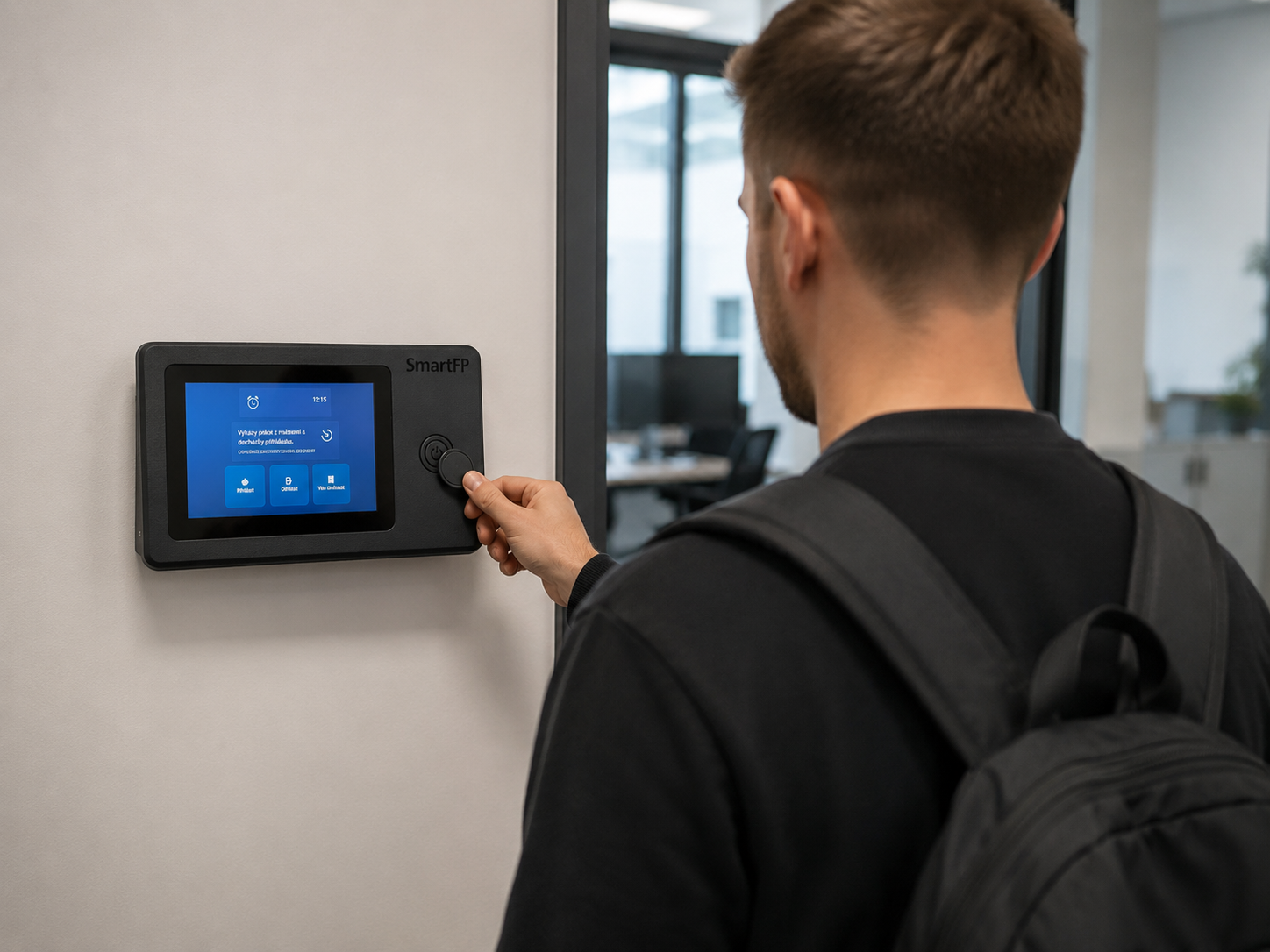
Today, an employee submits a request for vacation or other leave directly in the system. SmartFP immediately shows them how much time they have left and sends the request to their supervisor. The supervisor sees the request along with the context—that is, who else on the team already has approved time off for that date—and approves it with just a few clicks. If they’re out of the office, they can approve the request from their phone, so no one has to wait.
For the first time, HR and management have a real-time overview of attendance and absences. Vacation balances are calculated according to predefined rules, and the data serves as the basis for payroll, which the company forwards to its accountant.
“The biggest relief is that it’s not up to me,” the managing director sums up. “People submit their requests, the manager approves them, and everyone can see their balance. I’m no longer the bottleneck that every vacation request has to go through. “
A Smooth Deployment
The company didn’t have its own IT department, so it was worried about a complicated rollout. However, it turned out that it could handle it without any problems. The system was configured according to the company’s policies—how much vacation time each employee is entitled to, who approves what—and the only technical step was to synchronize the automatic notifications with email delivery. After that, notifications about requests began arriving reliably.
“I expected it would take weeks and that I’d need an ‘IT guy.’ It didn’t. We set it up, and the next day everyone was using it,” the managing director explains.
What Has Changed
Attendance and vacation policies are clearly defined at the company today, even though there are only a few dozen employees. Requests have a clear status, and approval is handled by a designated person. No one schedules overlapping leave within the same team twice, because it’s immediately clear who already has approved time off. Employees can view their remaining leave balance at any time, and the CEO is no longer the person without whom no vacation can be approved.
And because SmartFP grows with the company, the team is already considering the next steps—from employee record-keeping to electronic document signing—all on the same platform.
Do you handle attendance and vacation time in a similar “off the top of your head” way?
We’ll show you in a no-obligation demo how SmartFP can handle time and attendance and vacation requests even in a small business—simply and without unnecessary complexity. Request a demo at smartfp.cz