
Asset management functions in SmartFP
From asset records to allocations and transfers to inventories, audits and audit trails. All tied to a specific asset and traceable over time.





















benefits
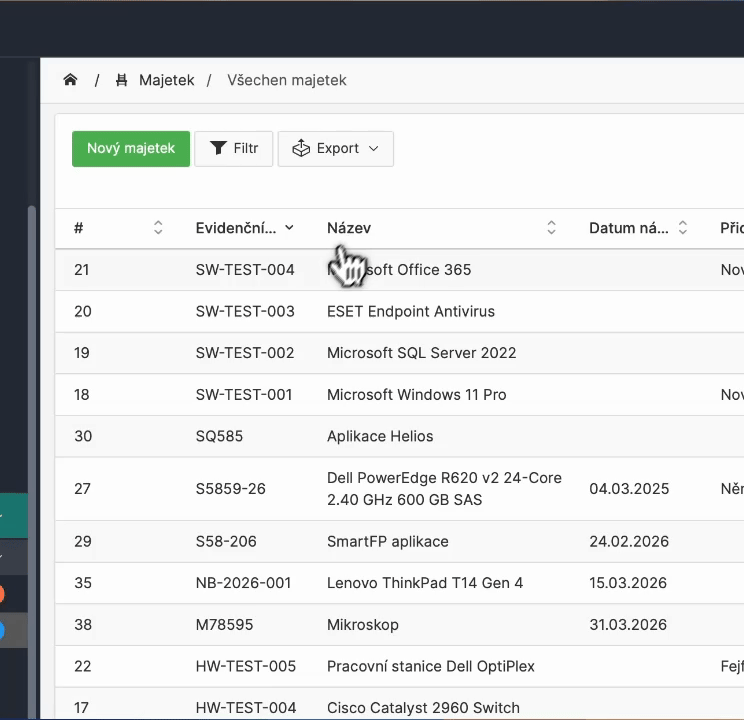
Asset register as a central asset register
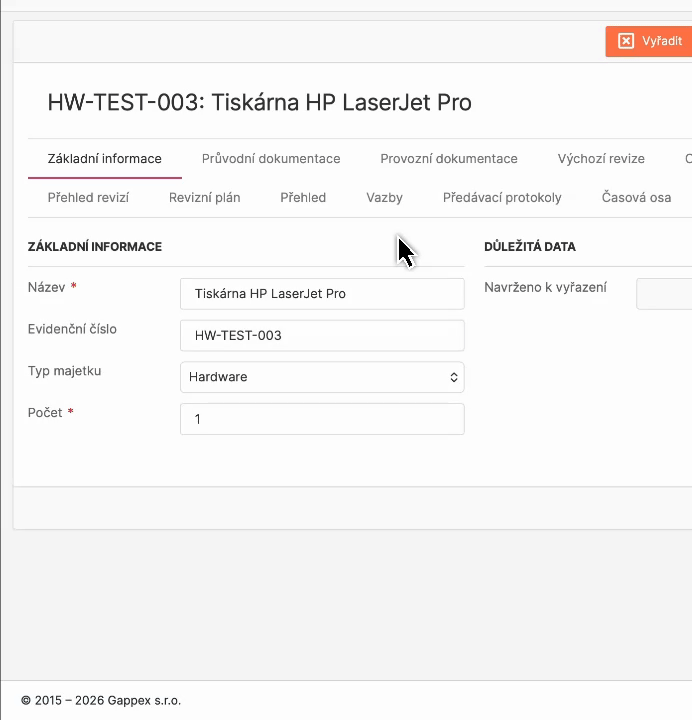
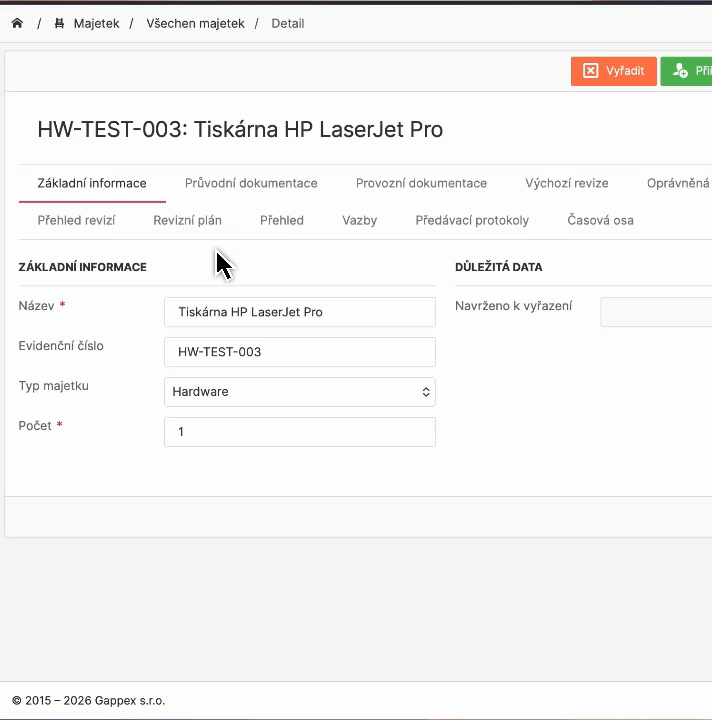
SmartFP keeps universal records of IT and operational assets – from laptops and mobile phones to servers, software and licenses. Each asset has its own card with identifiers, classification and important data.
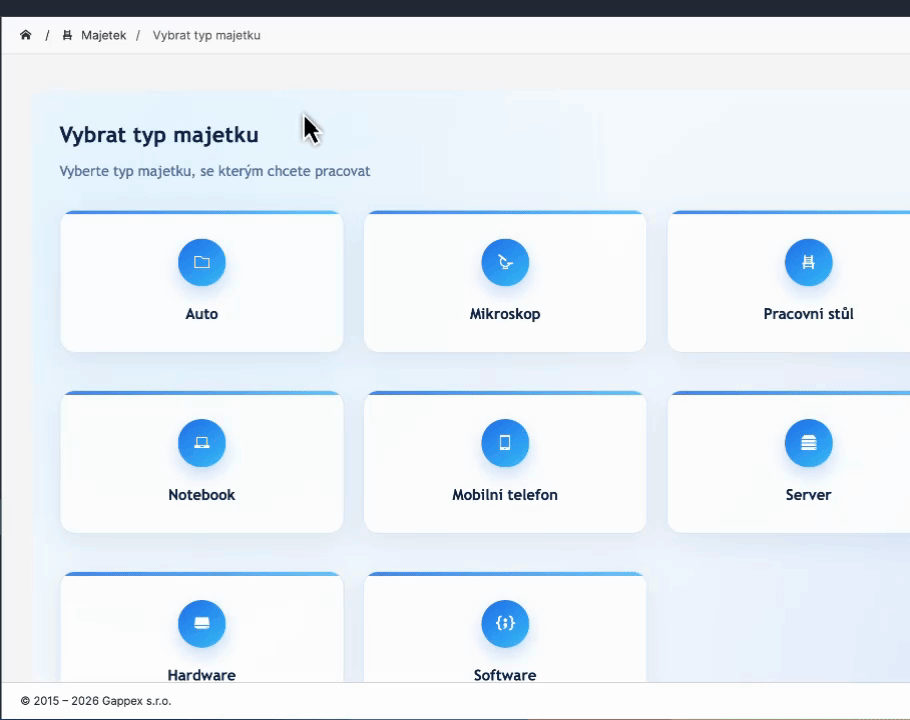
- Universal asset accounting – HW, SW, licenses, servers, databases and other types of assets.
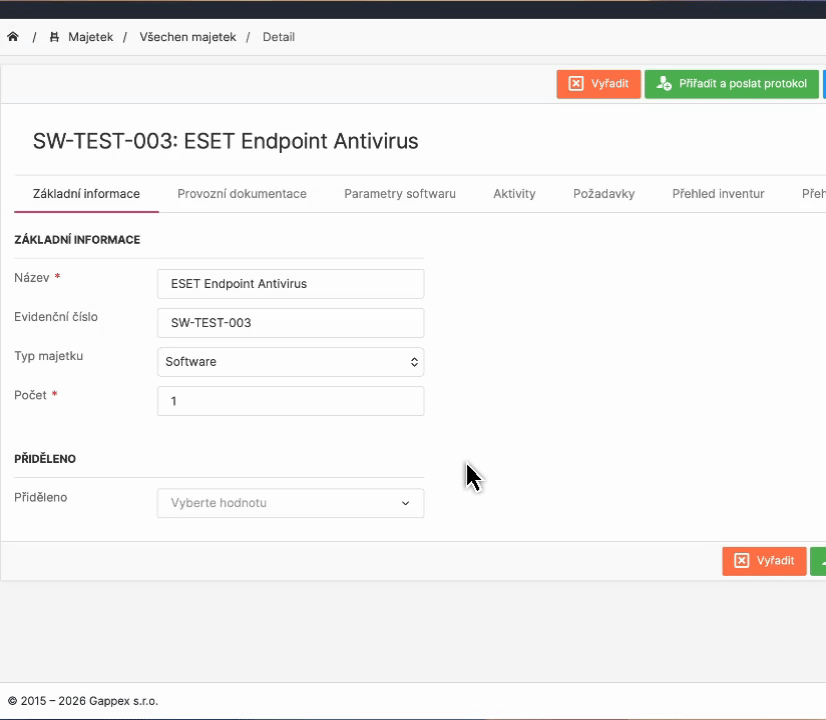
- Asset card – registration number, serial number, name, classification and condition.
- Supplier and manufacturer – supplier history and purchase/warranty history.
- Important data – date of purchase, warranty, revision, proposal for scrapping.
- Technical parameters – IP address, identifiers, versions, SW/HW updates.
- Attachments and notes – documents and files directly next to the asset.

process
Asset allocation without chaos
Asset management is more than just record keeping. SmartFP handles the entire lifecycle – assignment to an employee, return to the custodian and de-registration with a traceable history.
Assignment to an employee/unit – assignment to a responsible person or organizational unit.
Location in the organisation – location, building, room and an overview of “what’s where”.
Return of assets – simple return back to the trustee.
De-registration – ending the life cycle of an asset with a history.
Handover protocol – generating and sending the handover protocol.
Confirmation of acceptance/rejection – user accepts or rejects, all traceable.
check
Asset transfers between users with approval and history
When devices are moved between people, most confusion arises. SmartFP introduces transfers as a process: request → approval → handover → confirmation.
- Transfer requests – record of requests for transfer of property.
- Overview of all transfers – easy filtering and finding the transfer.
- Approval process – the takeover of the property will be done procedurally.
- Traceable history – you can see who took possession of the asset and who it belonged to.
- Handover protocol – automatically generated basis for handover.
benefits
Asset inventory quickly and demonstrably
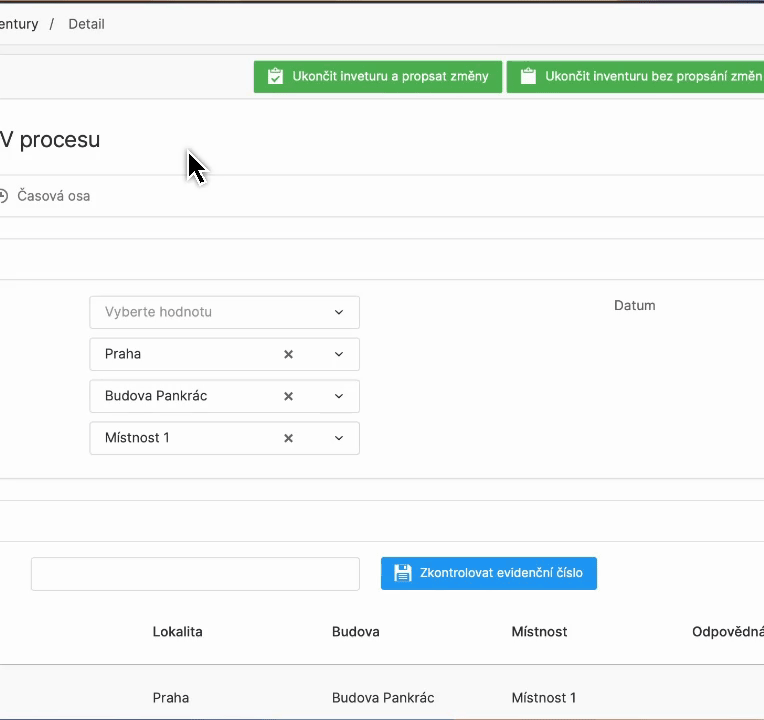
Inventories in SmartFP are not excel. You create an inventory by location or responsible person, check the items via QR and the system evaluates the differences between the records and the actual
Chapters and content – a simple breakdown that can be managed by HR.
Inventory by location – building, room or responsible person.
Start inventory in the system – clear list of items in inventory.
QR / registration number check – quick verification of items.
Evaluation of differences – missing, excess, inconsistencies.
Save progress – inventory can be saved and resumed.
Security
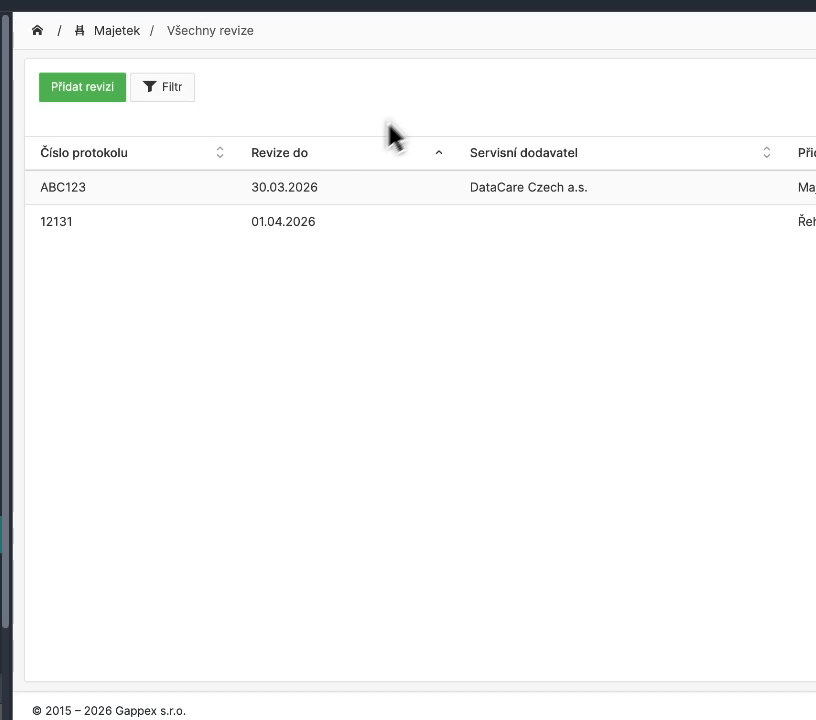
Revision and service reports with revision plan and history
For assets that require inspection or servicing, you need deadlines, logs and traceability. SmartFP holds the revision history and schedule and helps keep track of deadlines.
- Revision records – revision protocols, protocol numbers and record books.
- Service contractors and technicians – overview of contractors and authorizations.
- Validity of revisions – dates and intervals of revisions.
- Defects and measures – identified defects and recommended remedies.
- Revision plan – revision planning and revision history.
- Asset revision overview – you can see the complete history of each item.
extension
Documentation, events and links between assets
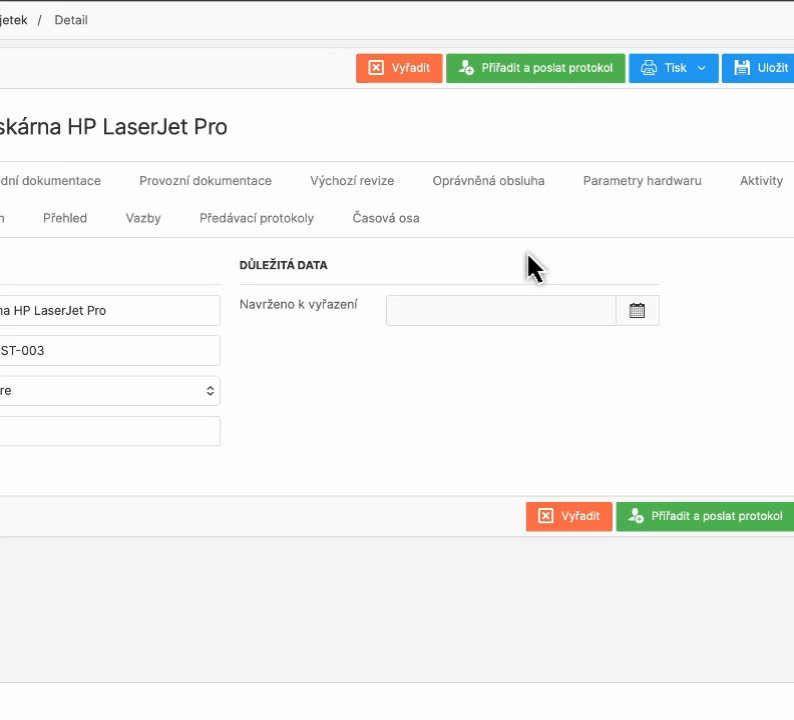
The asset card may have extension parts depending on the type of equipment. This allows you to record documentation, events, technical parameters and links between assets.
Supporting documentation – documents, annexes, validity of documents.
Operational records – notes and operational events for an asset.
Bindings between assets – SW-server, DB-server, license-device.
Technical parameters – HW parameters, CMDB fields, measurement units.
Activities and events – overview of changes and steps in the life cycle.
Inventory and revision overview – you can see the history of each asset.
Practice
QR tags for quick asset identification
QR tags will speed up inventory and field inspection. Each item is uniquely identified and inspection is a matter of seconds.
- Printing QR codes – unambiguous identification of assets in the organization.
- QR for inventory – quick verification of items without overwriting.
- QR for readings – possibility to use the labels also for measurements (if you keep records).
- Quick card tracking – after the QR is read, the asset card opens.
Automation
Warnings, planning and rules
The hardest part is keeping track of deadlines and rules. SmartFP can schedule revisions, alert you to upcoming expirations and suggest asset retirement according to set rules.
Revision scheduling – intervals (day/week/month/year) and automatic scheduling.
Expiry Warning – expiration of certificates and revisions.
Proposal for disposal – rules for proposal for disposal of assets.
Configuration by organization – system parameters, accounts and module rules.
Less manual checking – the system watches what would otherwise be missed.
FAQ
Your most common questions
Looking for answers to your questions or need help with our system? We’ve put together a list of frequently asked questions where you can find useful information and solutions to common problems. If anything is not clear to you? Send us a question.
What type of assets can SmartFP record?
Hardware (laptops, mobile phones, servers), software, licenses, databases and other assets. Each asset has its own card with identifiers, classification, supplier, warranty, location and attachments.
How does the transfer of assets to an employee work?
SmartFP will enable the allocation of assets and the generation of a handover report. The employee can confirm (or reject) the acceptance and everything is stored in the asset history.
How is the asset inventory carried out?
You create an inventory by location, building, room or responsible person. The check is carried out via a registration number or QR code and the system evaluates the differences between the registered and actual status.
How does SmartFP help with NIS2 requirements?
NIS2 starts with an overview of your assets: what you have, who uses it, where it is and what the status is. SmartFP provides a central asset registry, traceability, inventory, revisions and history – the evidence that auditors and IT need to manage risk.
I’ll see who has a particular device and where it is located?
Yes. Assets can be assigned to an employee or an organizational unit and the location (location, building, room) can be recorded. Thanks to the filters you can quickly find out “who has what” and “what is where”.
Can the system transfer assets between employees?
Yes. It is possible to keep track of requests for transfer of assets, to have an overview of all transfers and the process of acceptance/approval. The history is traceable to the specific asset item.
Does SmartFP support QR codes?
Yes. You can print QR labels to identify assets and use them for inventory (or for measurement readings if you keep records).
Is an audit trail and change history available?
Yes. For each item you can see the history of changes and events (who modified what when), plus an overview of inventory and revisions. This is essential for internal control and auditing.